
Your process.
The right automation.
Engineered together.
CNC machine tending, six-axis robots and gantry systems. Custom automation starts with your parts, your machines and your production goals.
your application
& unloading
& gantry systems
& integration
From machine tending
to the next process.
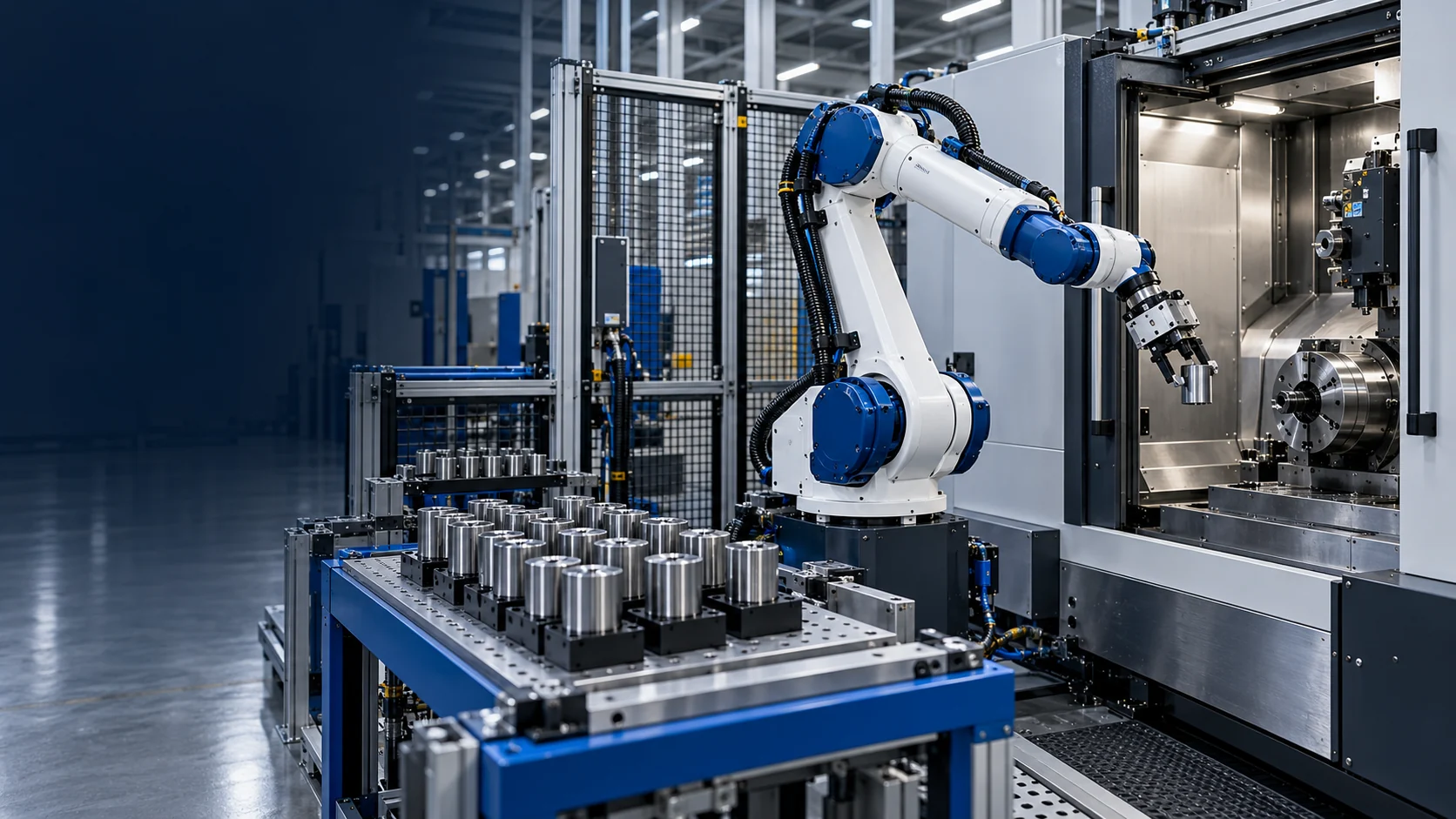
Primary applicationCNC Machine Tending
Robotic loading and unloading for machining centers. Start with your workpiece, fixture and machine interface.
Explore solution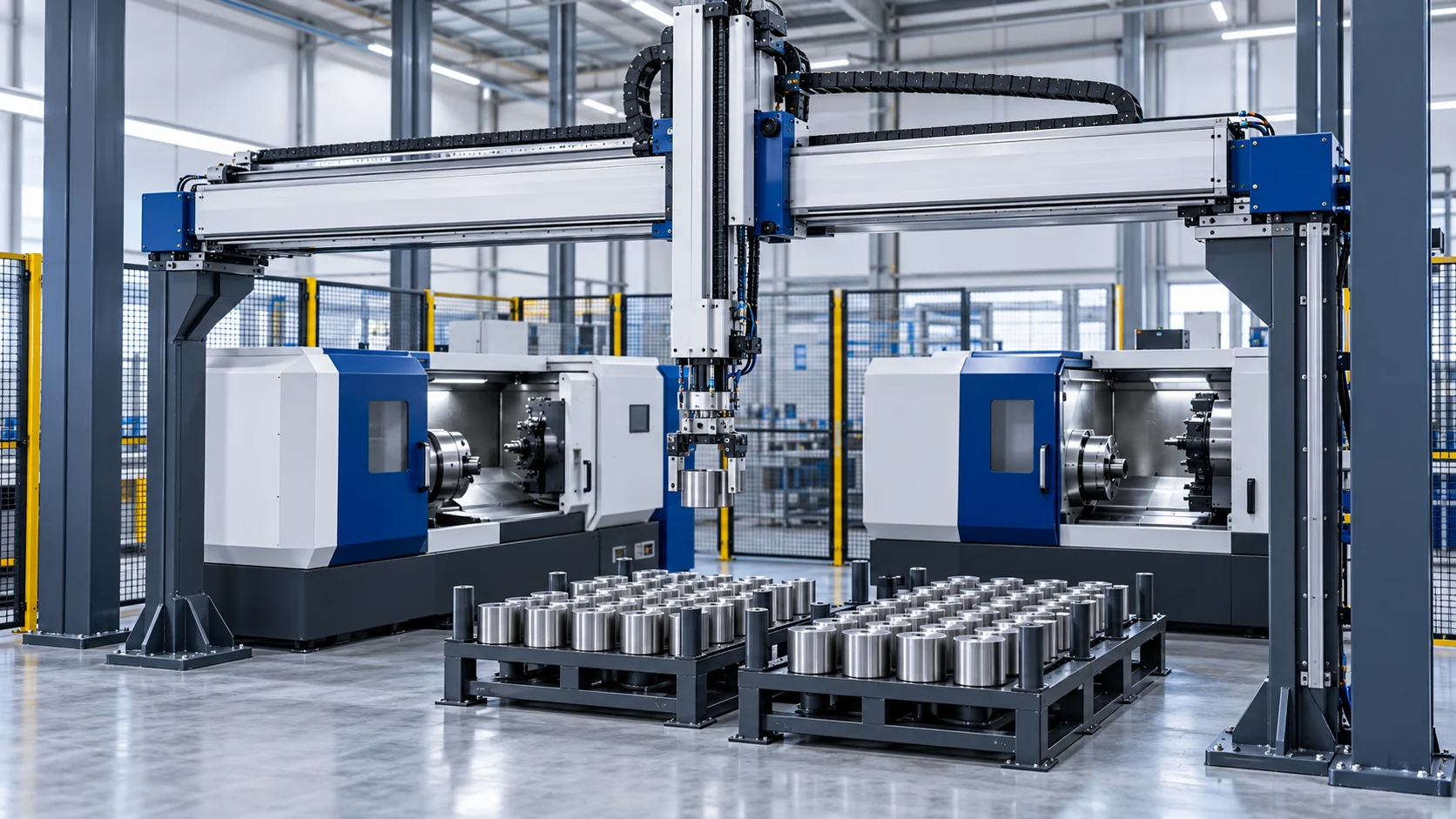 Turning automation
CNC Lathe Loading & Unloading
Plan repeatable part transfer for CNC turning, with chuck access and orientation considered from the start.
Explore solution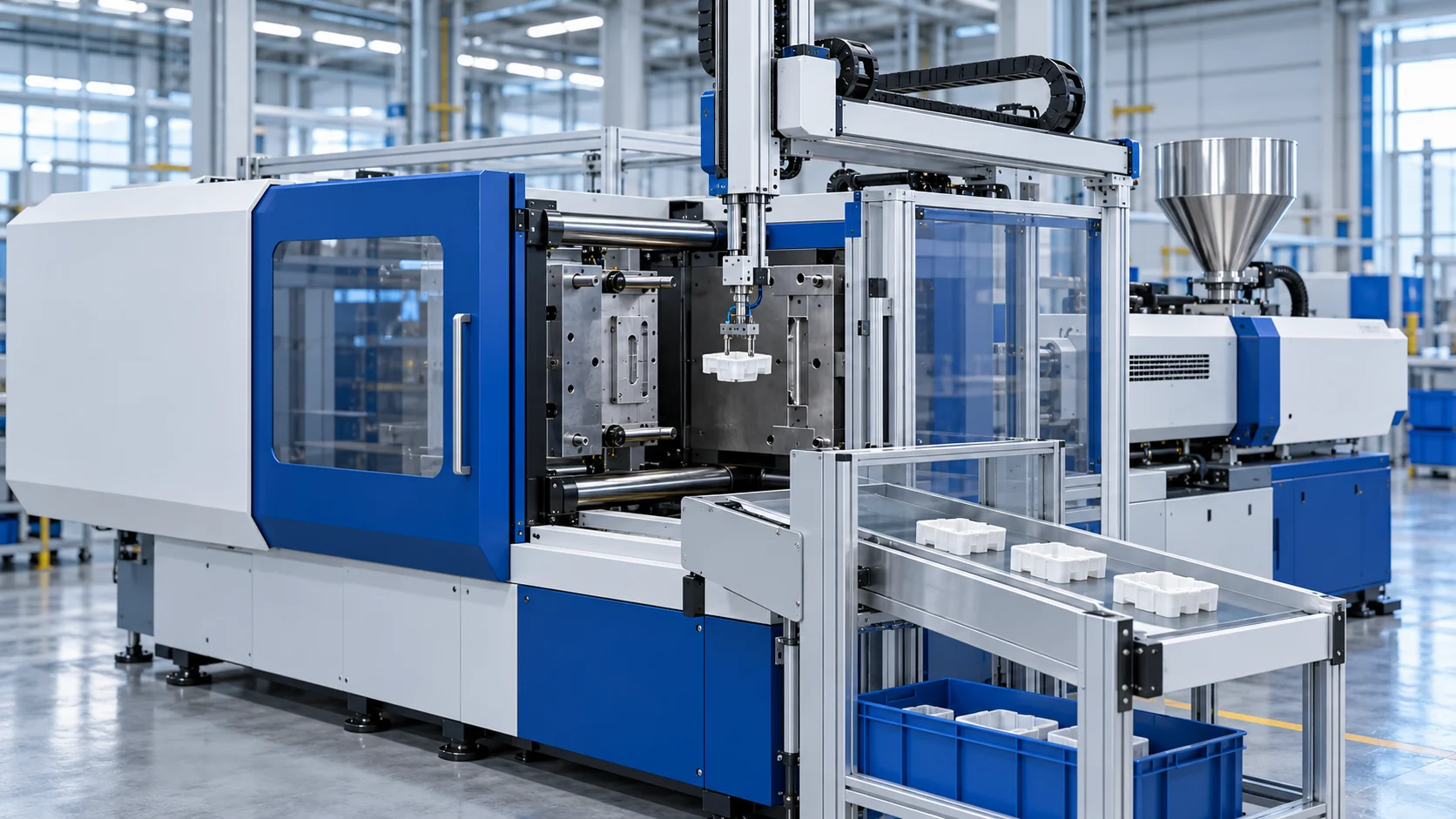 Controlled handling
Injection Molding Take-Out
Take-out and placement concepts matched to mold access, part geometry and the molding cycle.
Explore solution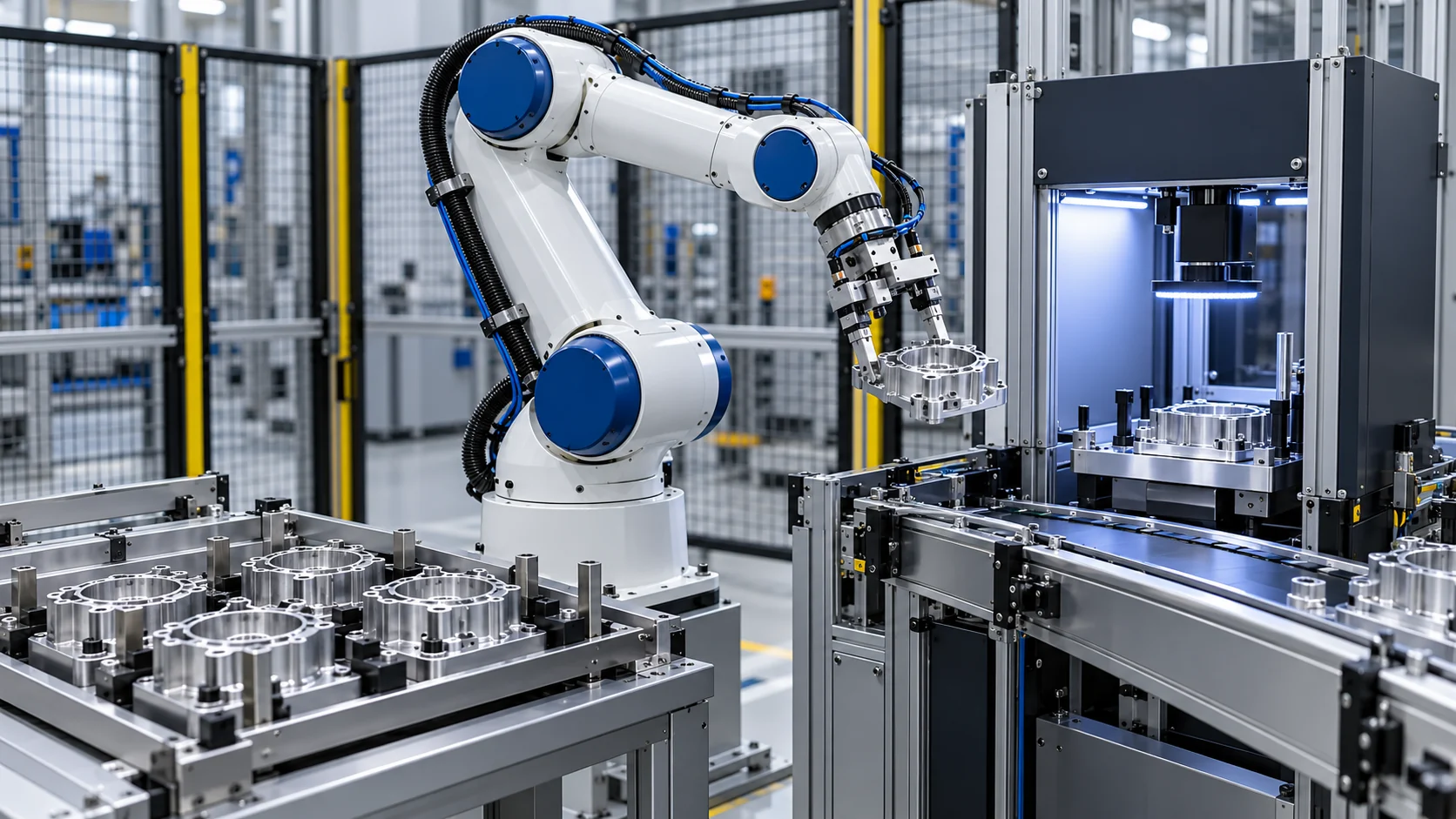 Process integration
Robotic Material Handling
Connect defined transfer, inspection and stacking steps with a handling system shaped around your parts.
Explore solutionEquipment images are AI-generated application concepts. Final equipment and layout are defined by your project.
Application concept / CNC gantry loadingA robot isn’t always
the whole answer.
Your part, machine access and workflow determine the approach. We compare the options before defining the cell.
Evaluate flexible movement when a part needs reorientation or transfer between several defined stations.
- Part orientation and multi-station movement
- Reach, payload and gripper review
- Cell access and safeguarding assessment
Evaluate a defined overhead or linear loading path when the machine arrangement and part family support it.
- Linear travel and overhead access
- Machine spacing and structural review
- Loading sequence and buffer planning
Combine dedicated mechanisms, conveyors and fixtures for a stable process with clearly defined transfer steps.
- Purpose-designed transfer and tooling
- PLC interfaces and part detection
- Recovery and changeover requirements
More than a robot.
A connected process.
Reliable automation depends on what happens before, during and after every transfer. These are the questions that shape a practical concept.
The workpiece
How is it presented, located and gripped? Which surfaces must be protected, and what changes across the part family?
The machine
How are the door, fixture, chuck and control signals coordinated? What access is needed for operation and maintenance?
The workflow
Where do parts wait, move and leave the cell? How will operators change parts, recover faults and verify the result?
Start with a controlled process.
Build from there.
Our primary focus is CNC machining. Selected molding, inspection and handling applications are reviewed against clear process boundaries.
Precision machining
Defined part families, machining centers and turning cells.
Metal components
Shafts, housings and other components with stable grip surfaces.
Plastics processing
Molded-part take-out and controlled downstream placement.
Inspection & transfer
Repeatable presentation, transfer and tray-stacking workflows.
A clear path to your solution.
Define the process
Share your part, machine, current workflow and production target.
Compare the routes
Review robot, gantry and dedicated handling concepts against your constraints.
Agree the scope
Define interfaces, tooling, safety responsibilities and acceptance criteria.
Plan the handover
Align on trials, documentation, installation and operator training needs.
Planning your first
automation project?
Start with the process you know. We’ll help identify the questions that need engineering review.
Talk through your applicationWhat is robotic CNC machine tending?
Robotic CNC machine tending uses a robot or gantry to transfer parts into and out of a machine. A complete concept also considers part presentation, gripping, workholding, machine signals, operator access and fault recovery.
Should I choose a six-axis robot or a gantry?
A six-axis robot is worth evaluating when part orientation and movement between stations matter. A gantry is worth evaluating for a defined linear loading path or an overhead layout. The choice depends on your part family, reach, access, machine arrangement and cycle sequence.
Can an existing CNC machine be automated?
Possibly. We first review the machine model, door access, fixture or chuck control, machine-ready signals and the available interface. Any machine modifications and responsibilities are agreed before a proposal is finalized.
What information do you need for a quotation?
Send part drawings or photographs, part mass and dimensions, machine make and model, current process sequence, cycle time, production volume and a layout or short process video. An initial concept can begin with the information you have.
Do you guarantee a standard cycle time or payback period?
No. Cycle time, utilization and payback depend on the application. Targets must be based on measured process data and verified during engineering review and agreed trials.
Tell us about the process.
We’ll explore the right automation.
Start with your part drawing, machine model or a short process video.